
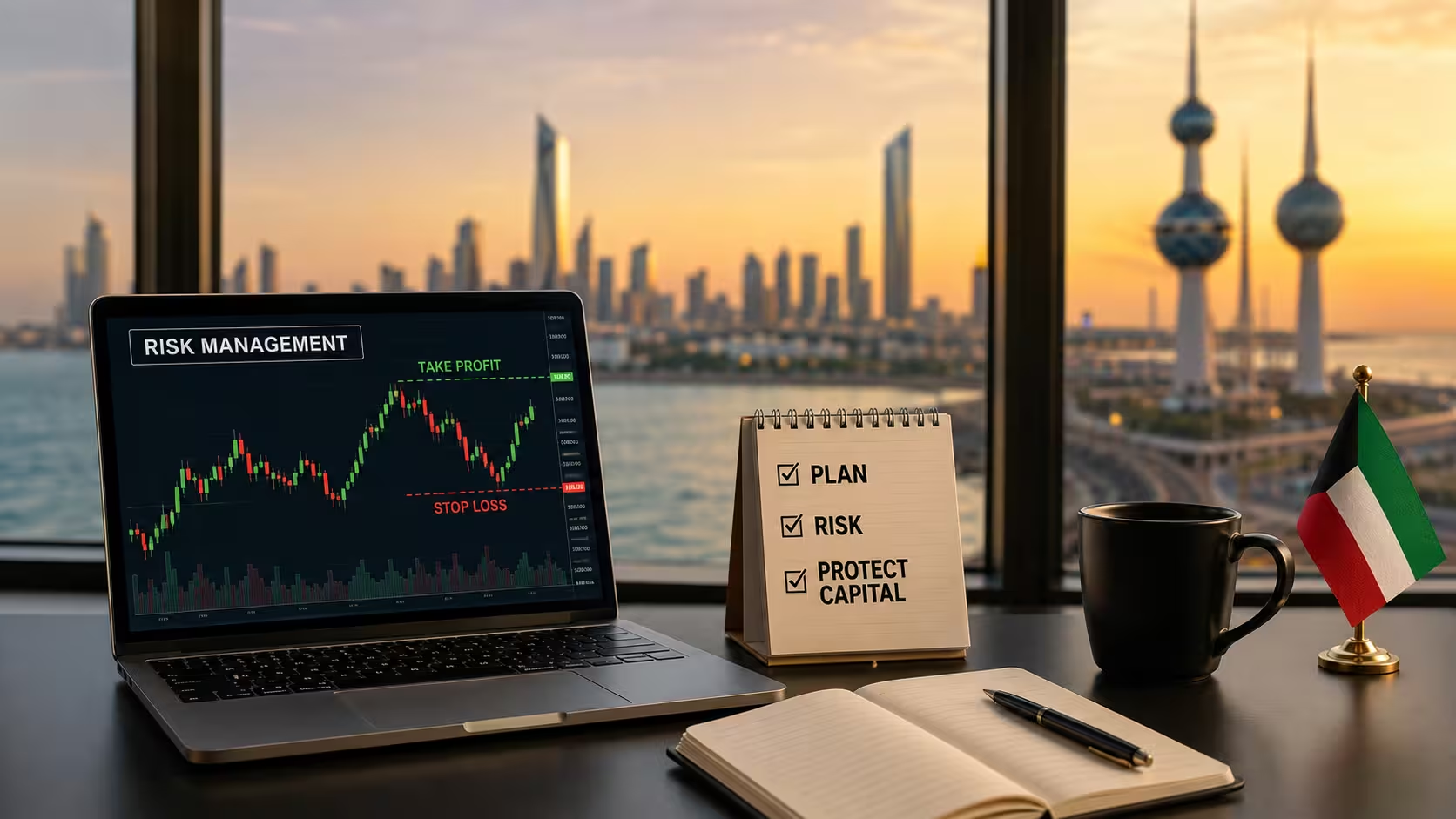
Why Risk Management Matters More in Kuwait Than the Ads Let On
Open Instagram or YouTube for five minutes and you’ll run into someone flashing a phone screen full of green numbers, telling you trading is the fastest way to build wealth in Kuwait. What those videos never show you is the account that got wiped out three weeks later because nobody talked about forex risk management.
Here’s the thing — strategy gets you into trades, but risk management is what decides whether you’re still trading a year from now. And for beginners practicing forex risk management in Kuwait specifically, there are a few extra wrinkles worth knowing before you fund an account. Let’s get into it.
1. Only Risk Money You Can Actually Afford to Lose
This sounds obvious, but it’s the rule most people break first. A common guideline is to never risk more than 1–2% of your total trading capital on a single trade. If you’re trading with $1,000, that’s $10–20 on the line per trade — not $200 because you “felt confident” about a setup.
The strong Kuwaiti dinar gives residents decent purchasing power when funding an account, and that’s exactly why it’s tempting to start bigger than you should. Start small, prove your process works, and only scale up once you’ve got a track record you actually trust—not a hunch.
2. Always Trade With a Stop-Loss
No exceptions here. A stop-loss is the order that closes your trade automatically once it moves against you past a certain point. Skip it, and you’re basically hoping the market turns around instead of managing the outcome.
New traders sometimes remove their stop-loss mid-trade because they’re convinced the price will “come back.” Sometimes it does. Often it doesn’t, and that one decision undoes weeks of careful trading. Set it before you enter the trade, and leave it alone.
3. Understand Leverage Before You Touch It
A lot of brokers serving Kuwaiti clients advertise high leverage—sometimes 1:500 or more—because it lets you open bigger positions with less capital. That’s genuinely useful, but only if you understand what it does to your losses too, not just your potential gains. If you want the full breakdown of how this works with real numbers, see our guide on forex leverage explained.
High leverage means small price moves can eat through your account fast. If you’re new, using a fraction of the leverage on offer — not the maximum — is the difference between a manageable loss and an account-ending one.
4. Use a Broker That’s Actually Regulated—and Check Where
This one’s specific to trading from Kuwait. There isn’t a dedicated local regulator overseeing retail forex and CFD trading the way some other countries have — Kuwait’s Capital Markets Authority regulates the local securities market and Boursa Kuwait, but has publicly stated it has no authority over forex, metals, or commodities brokerage. That means most of the responsibility for picking a safe broker falls on you.
Practically, this means sticking to brokers regulated by well-known international bodies (UK, EU, Australia, and similar), checking that client funds are held separately from company funds, and being skeptical of any broker promising guaranteed returns — that’s not how markets work, regulated or not.
5. Know What “Swap-Free” Actually Means if It Matters to You
If Sharia compliance is a factor in how you trade, most brokers serving Kuwaiti clients now offer swap-free (Islamic) accounts, which remove the overnight interest charge and typically replace it with a flat fee or slightly wider spread instead. It’s worth reading the fine print though — a swap-free label alone doesn’t automatically settle the broader question of whether a specific account setup is halal, so confirm the details directly with the broker rather than assuming.
6. Diversify—Don’t Put Everything Into One Pair or One Idea
It’s tempting to find one setup that worked once and keep repeating it with bigger size every time. That’s not a strategy; that’s a bet. Spreading your risk across a few different pairs, asset classes, or timeframes means one bad call doesn’t take out your whole account in a single afternoon.
This doesn’t mean opening ten trades at once just to feel “diversified” — it means not concentrating so much risk in one idea that a single move against you becomes catastrophic.
7. Keep a Trading Journal and Actually Review It
Most beginners skip this because it feels like homework, but it’s probably the single highest-leverage habit (pun intended) you can build. Write down why you entered a trade, what your plan was, and what actually happened. After a month, patterns show up — maybe you always cut winners early, or maybe you consistently ignore your own stop-loss when a trade “feels right.”
A journal turns vague feelings about your trading into actual data you can improve from. Without one, you’re just repeating the same mistakes with more confidence each time.
Putting Forex Risk Management in Kuwait All Together
None of these rules are complicated, and that’s kind of the point—risk management isn’t about finding a secret formula, it’s about consistently doing the boring things every single trade. Risk a small percentage. Use a stop-loss. Respect leverage instead of chasing it. Trade with a properly regulated broker. Know your account setup inside out. Spread your risk. Track what you actually do.
The traders who last in this market usually aren’t the ones with the flashiest strategy — they’re the ones who protected their capital long enough to let a good strategy actually work. That’s the real substance behind good forex risk management in Kuwait, ads or no ads.
This article is for educational purposes only and does not constitute financial advice. Trading involves substantial risk of loss and is not suitable for all investors.