Forex trading in Kuwait means buying and selling currency pairs, such as EUR/USD or GBP/USD, through an online broker from your phone or laptop, almost any hour from Monday to Friday. For traders in Kuwait, the best hours usually fall in the afternoon and evening, when London and New York are both open. This guide explains how the market works, when to trade in Kuwait time, what lots, pips and leverage really mean, and how to take your first steps without rushing.
What Is Forex Trading?
Forex (foreign exchange, or FX) is the global market where currencies are exchanged. It is the largest financial market in the world: the Bank for International Settlements’ 2025 survey put average trading at about $9.6 trillion per day.
Currencies always trade in pairs. If EUR/USD is at 1.1500, one euro costs 1.15 US dollars. The first currency is the base and the second is the quote.
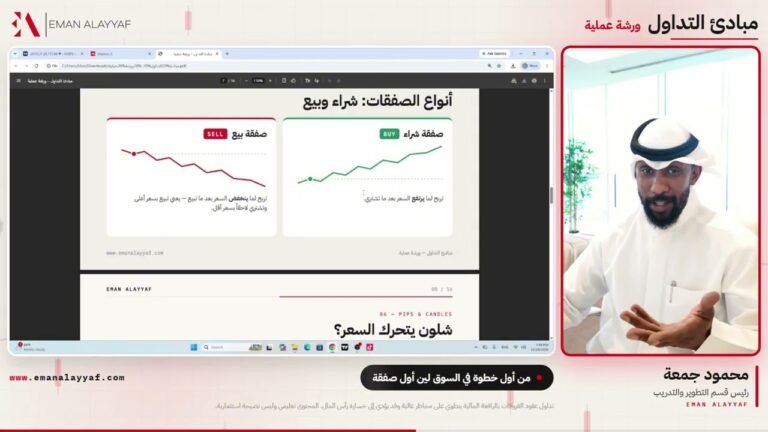
- Buy (long) if you expect the base currency to strengthen against the quote currency.
- Sell (short) if you expect it to weaken.
Retail traders in the Gulf usually trade forex as CFDs (contracts for difference). You never receive the actual euros or dollars. You trade the price movement, and your profit or loss is the difference between your entry and exit price.
Why the Kuwaiti Dinar Is Rarely the Pair You Trade
Many beginners in Kuwait expect to trade the dinar. In practice, almost nobody does. The Central Bank of Kuwait has managed the dinar against an undisclosed basket of major currencies since 2007 (see its exchange rate policy), so USD/KWD moves very little from day to day. There simply isn’t much movement to trade.
That is why traders in Kuwait focus on the most liquid global pairs and on gold. Most trading accounts are also held in US dollars, so results are measured in dollars rather than dinars.
The Main Pairs Kuwaiti Traders Watch
- EUR/USD: the most traded pair in the world, usually with the tightest spreads. A natural first pair.
- GBP/USD: faster and more volatile, with strong moves during the London session.
- USD/JPY: very sensitive to US interest rates and bond yields.
- AUD/USD and USD/CAD: closely linked to commodities, most active in the Asian and American sessions respectively.
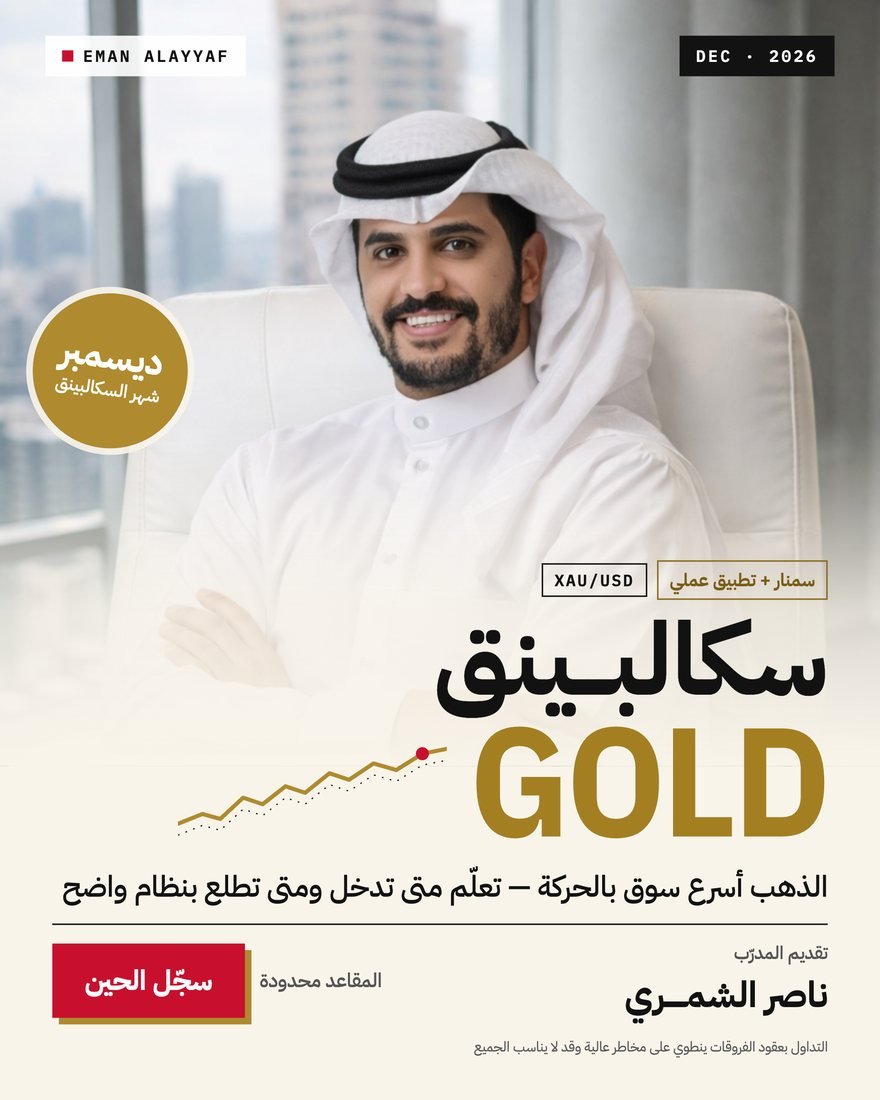
- XAU/USD (gold): not a currency, but traded on the same platforms and the favourite market of many Gulf traders. See our gold trading guide.
A good habit for beginners: master one or two markets first. Knowing how EUR/USD and gold behave at different times of day is worth more than watching twenty charts.
Forex Market Hours in Kuwait Time
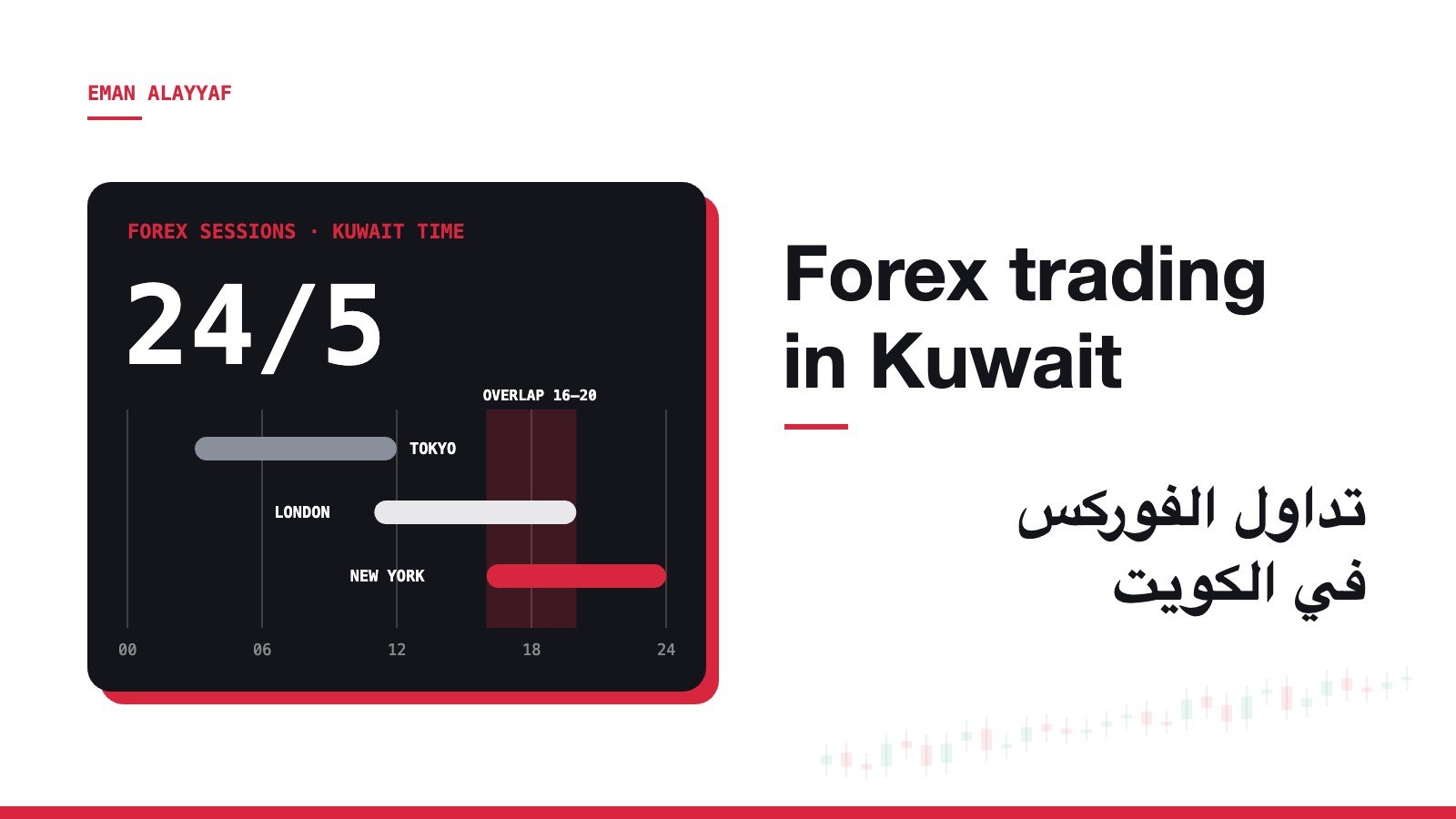
The forex market runs 24 hours a day, five days a week, passing from one financial centre to the next. Kuwait stays on GMT+3 all year, so the hours shift only when Europe and the US change their clocks. In winter, the trading week opens at around 1:00 am on Monday and closes at around 1:00 am on Saturday, Kuwait time; in summer, both are about an hour earlier. Exact times depend on your broker.
| Session | Winter (Nov to Mar) | Summer (Mar to Oct) |
|---|---|---|
| Tokyo (Asian session) | 3:00 am to 12:00 pm | 3:00 am to 12:00 pm |
| London | 11:00 am to 8:00 pm | 10:00 am to 7:00 pm |
| New York | 4:00 pm to 1:00 am | 3:00 pm to 12:00 am |
| London and New York overlap | 4:00 pm to 8:00 pm | 3:00 pm to 7:00 pm |
The London and New York overlap is usually the busiest window of the day, with the most volume and the biggest moves, and it lands at a convenient time for most people in Kuwait: after work. Major US economic releases such as inflation (CPI) and the jobs report (NFP) usually come out at 4:30 pm Kuwait time in winter (3:30 pm in summer), and they can move EUR/USD and gold sharply within seconds.
Note that the US and the UK change their clocks on different dates, so for a few weeks in March and in late October to early November, the times above can be an hour off. For a deeper look at each session, read our guide to forex market hours in Kuwait.
Lots, Pips and Spreads: The Basics
Three terms decide how much money is actually at stake on each trade:
- Pip: the standard unit of price movement. For most pairs it is the fourth decimal place (0.0001), so EUR/USD moving from 1.1500 to 1.1510 is a 10-pip move. For yen pairs it is the second decimal place.
- Lot: your trade size. One standard lot is 100,000 units of the base currency, a mini lot (0.10) is 10,000 and a micro lot (0.01) is 1,000.
- Spread: the small difference between the buy and sell price. It is the main cost of a trade, and it usually widens around big news releases and in quiet hours.
On EUR/USD, one pip is worth about $10 on a standard lot, $1 on a mini lot and $0.10 on a micro lot. A 20-pip move against you costs about $200 with 1 lot, but only $2 with 0.01 lots. That is why lot size, not the pair, is the first thing to get right. Our free lot size calculator does the maths for you.
Leverage and Margin: Use With Care
Leverage lets you open a position larger than your deposit. With 1:500 leverage, 1 standard lot of EUR/USD at 1.1500 (a position worth $115,000) needs only about $230 of margin.
That sounds attractive, but leverage does not change how much each pip is worth. It only changes how little money is set aside. A large position on a small account can be wiped out by a normal daily move. Experienced traders treat high leverage as flexibility, not as a reason to trade bigger. Read leverage explained: why 1:500 is not free money before you use it.
Swap-Free (Islamic) Accounts
When you hold a position overnight, a standard account charges or pays a swap: an interest adjustment based on the interest rates of the two currencies. Many traders in Kuwait prefer a swap-free (Islamic) account, which removes these overnight interest charges. Conditions differ between brokers and account types, so always check the details before you open one. We explain how they work in our guide to Islamic forex accounts in Kuwait.
How to Start Forex Trading in Kuwait: 6 Steps
- Learn the basics first. Understand pairs, pips and lots, and what moves currencies: interest rates, inflation, jobs data and central bank decisions.
- Choose a regulated broker. Check who regulates the company, how deposits and withdrawals work, and whether a swap-free account is available. Our team works with XTB, whose regional company, XTB MENA, is licensed by the Dubai Financial Services Authority (DFSA).
- Practise on a demo account. Trade virtual money for a few weeks. Focus on following a plan, not on profit.
- Write a simple plan. Decide which market you trade, at what time, what your entry signal is and where your stop loss goes, before you click buy or sell.
- Manage your risk. Many traders risk only 1 to 2% of their account per trade and always use a stop loss. Our risk management guide shows you how.
- Start small on a live account. Use micro lots at first, keep a trading journal and increase your size only once your results are consistent. Here is how to open a trading account in Kuwait, step by step.
Common Mistakes Beginners in Kuwait Make
- Trading too big. Opening 1 lot on a $500 account just because the leverage allows it.
- Jumping in right before the news. Opening a trade seconds before the 4:30 pm US release, when spreads widen and price can spike in both directions.
- Skipping the stop loss. Hoping a losing trade will come back is the fastest way to empty an account.
- Changing strategy every week. Switching methods constantly means never learning one properly.
- Revenge trading. Doubling your size after a loss to win it back quickly usually makes the loss bigger.
Learn Forex With a Team Based in Kuwait
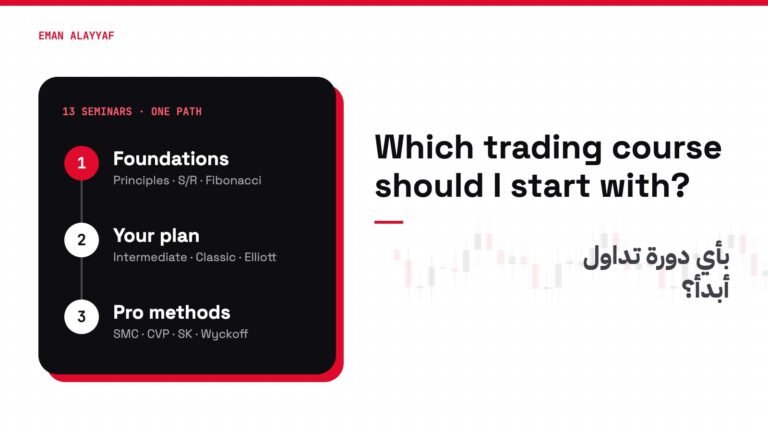
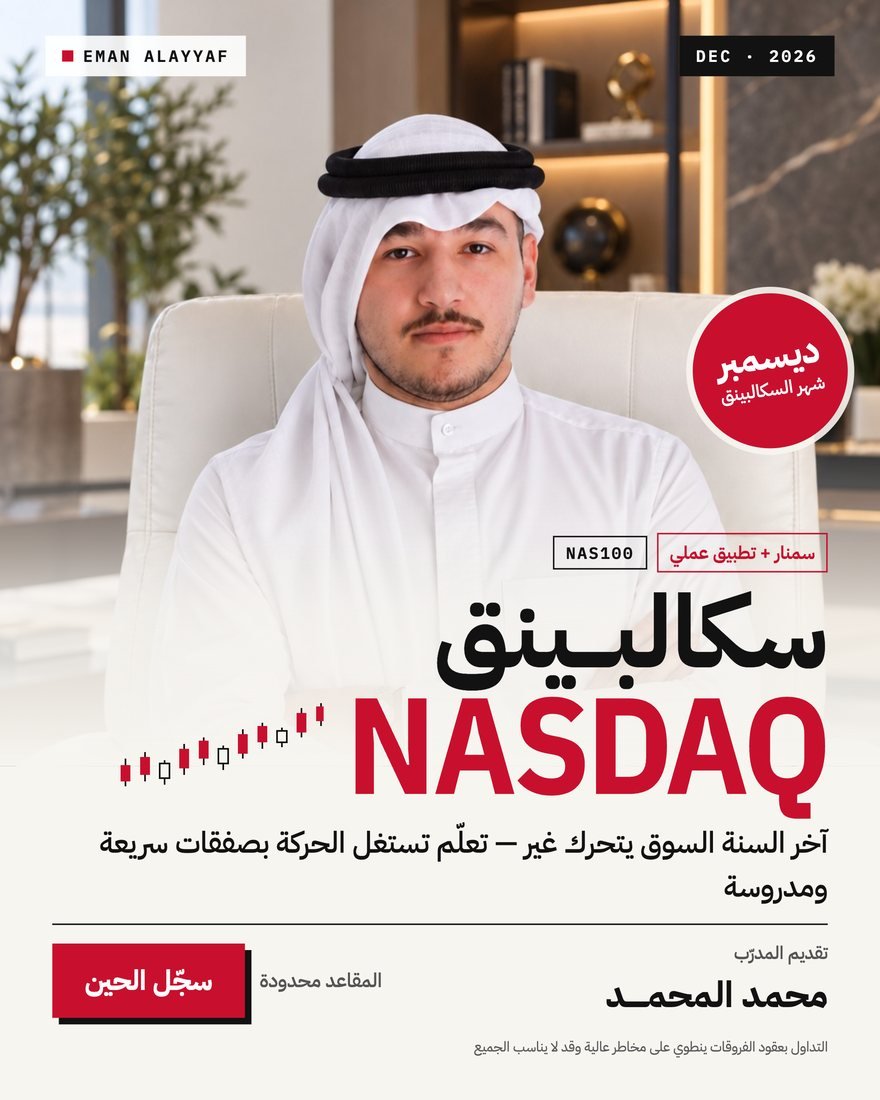
Learning alone from random videos is slow and often expensive. At Eman Alayyaf, our seminars and courses take you from the basics to a complete trading plan, live and with real charts: reading candles, choosing your lot size, placing a stop loss and planning around the news. You can also add the free Eman Alayyaf indicator to TradingView to follow key levels on gold and Nasdaq.
Ready to take your first step? Book your free trading workshop and our team will help you choose the right course and open your account the right way. You can also see upcoming dates on our seminars page.
Frequently Asked Questions
How much money do I need to start forex trading in Kuwait?
There is no single fixed amount. What matters is matching your lot size to your account. With micro lots (0.01), one pip on EUR/USD is worth about $0.10, so even a small account can follow a 1 to 2% risk rule. Only trade with money you can afford to lose.
What time does the forex market open in Kuwait?
In winter, the trading week opens at around 1:00 am Kuwait time on Monday (around midnight in summer) and closes at around 1:00 am on Saturday. The most active hours are usually 4:00 pm to 8:00 pm Kuwait time in winter, when London and New York overlap.
Can I trade forex without paying swap?
Yes. Many brokers offer swap-free (Islamic) accounts that remove overnight interest charges. Conditions vary, so read the account terms carefully before you open one.
Which currency pair is best for beginners?
EUR/USD is the usual starting point: it is the most traded pair, typically has tight spreads and tends to move more steadily than pairs like GBP/USD. Many Gulf traders also follow gold (XAU/USD), but it moves faster, so start with smaller sizes.
Do I need to follow the news to trade forex?
You don’t need to be an economist, but you should know when major releases are scheduled, especially US inflation, jobs data and Federal Reserve decisions, and be careful around those times.
Trading CFDs involves high risk due to leverage and may result in the loss of capital. This content is educational and not financial advice.
Want to learn this step by step?
Join our free seminars or talk to our team — we’ll help you choose the right starting point.
Risk warning: CFDs and forex carry a high risk of losing money due to leverage. This article is educational and is not investment advice.