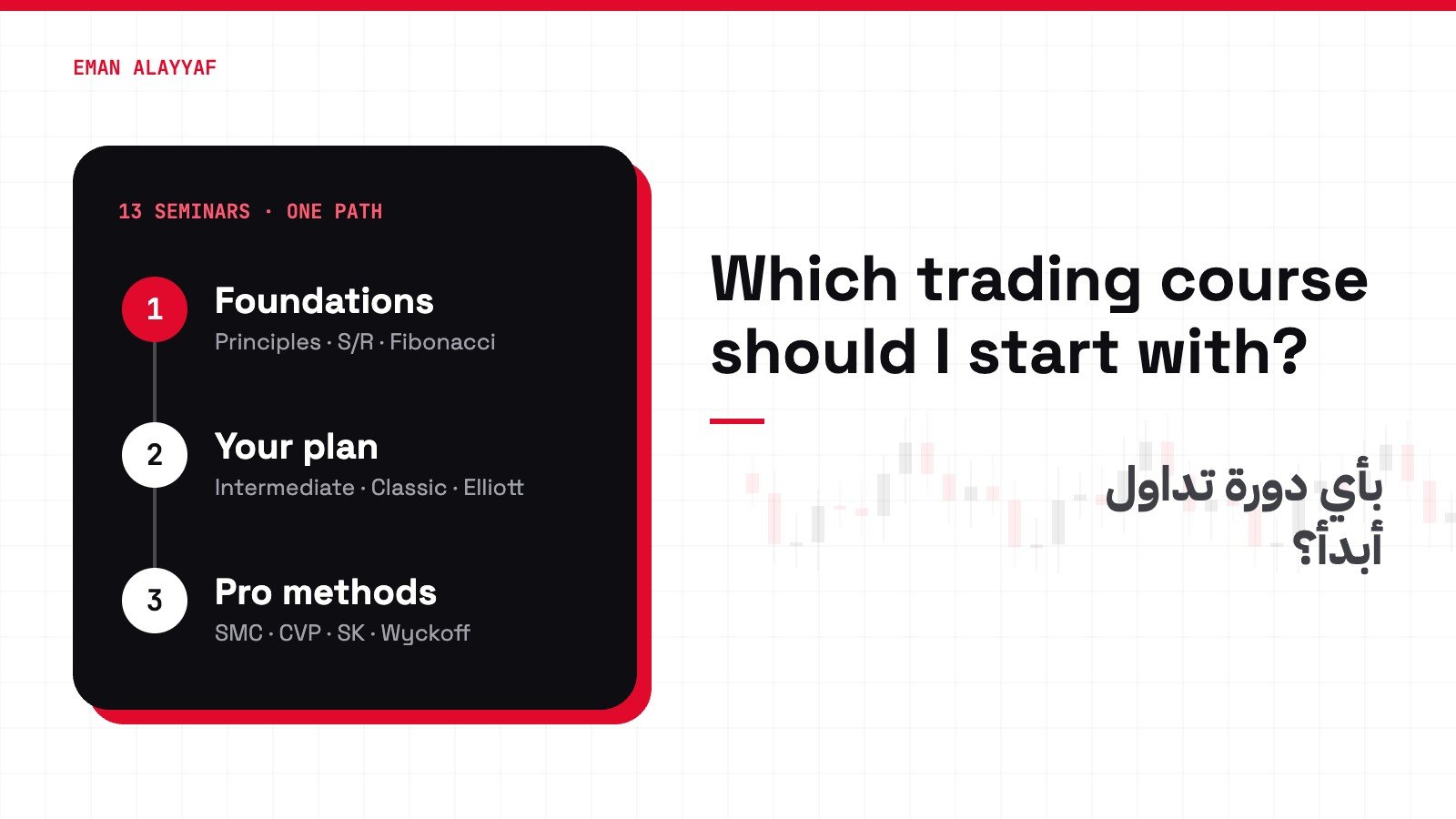
“Where do I start?” is the question we hear most from new traders in Kuwait and the Gulf. With topics like Fibonacci, SMC, Elliott Waves and Wyckoff, it is easy to jump into an advanced method too early and feel lost. This guide gives you a clear roadmap through our 13 seminars, from your very first trade to professional methods, so you always know what to learn next.
Want a quick answer? Take our 30-second quiz: 4 questions and we match you with the right seminar.
Stage 1: the foundations (start here)
If you are new, or you have traded a little without a clear method, start with these four. They build on each other.
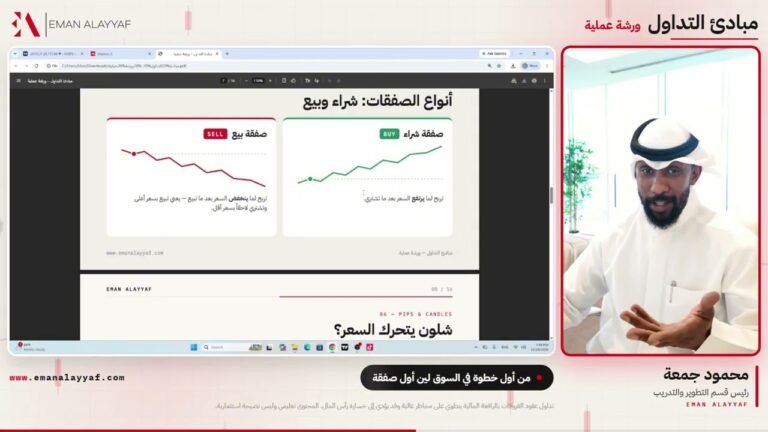
- Trading Principles: how markets work, the key terms (lot, pip, spread, leverage), and your first position on a demo account.
- Support & Resistance: finding the price levels the market reacts to, and planning entries and exits around them.
- Fibonacci: using retracements and extensions to find pullback zones and realistic targets.
- Supply & Demand: spotting the zones where buyers and sellers stepped in, and why price moves strongly away from them.
Stage 2: build your trading plan
Once you can read levels on a chart, these seminars help you put everything together into a method you can repeat.
- Intermediate Trading: combining levels, trends and patterns into one complete trading plan.
- Classic Technical Analysis: chart patterns such as head and shoulders, triangles and double tops, and how to trade them.
- Elliott Waves: reading the wave structure of the market to understand where a trend is in its cycle.
Stage 3: professional methods
These go deeper into how big players move the market. They make the most sense once the first two stages feel natural.
- SMC (Smart Money Concepts): order blocks, liquidity and market structure.
- CVP: reading the volume traded at each price to see where real buying and selling happened.
- SK System: a rules-based method using Fibonacci and market structure to find high-probability zones.
- Wyckoff Method: spotting accumulation before a rise and distribution before a fall.
Fast markets: scalping
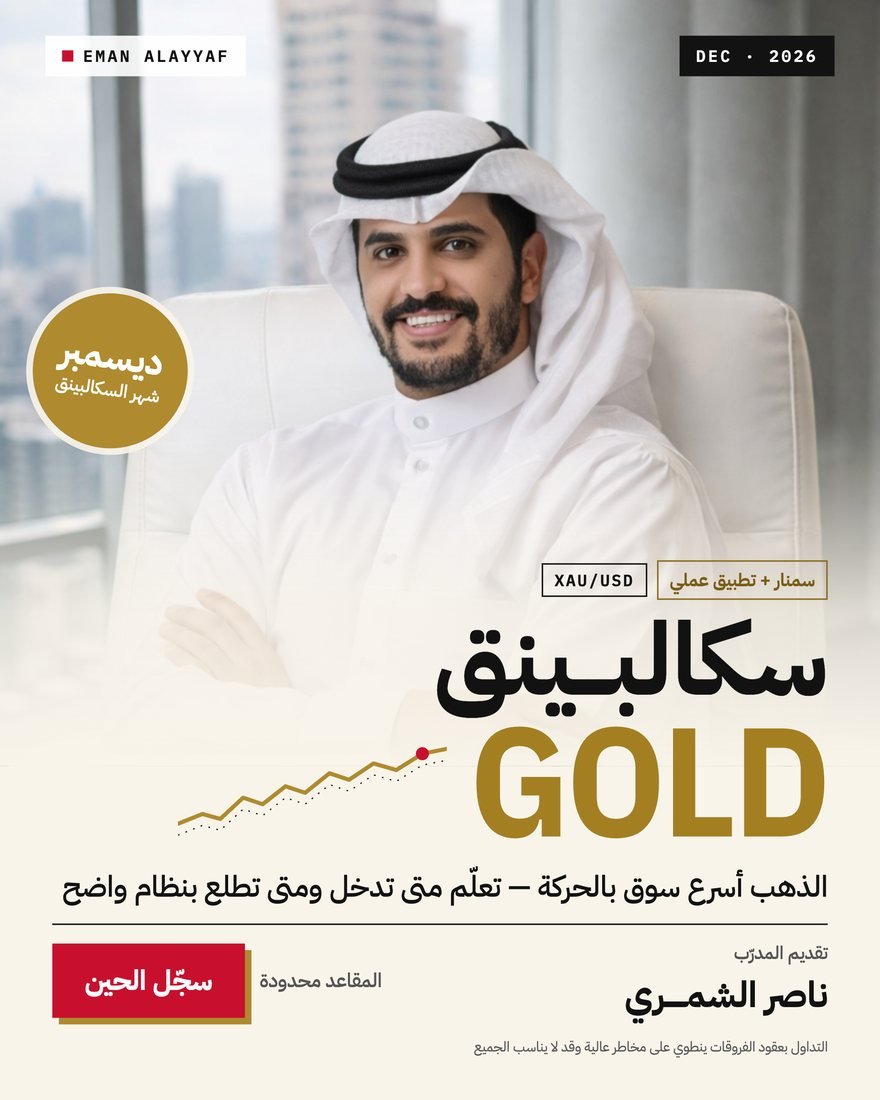
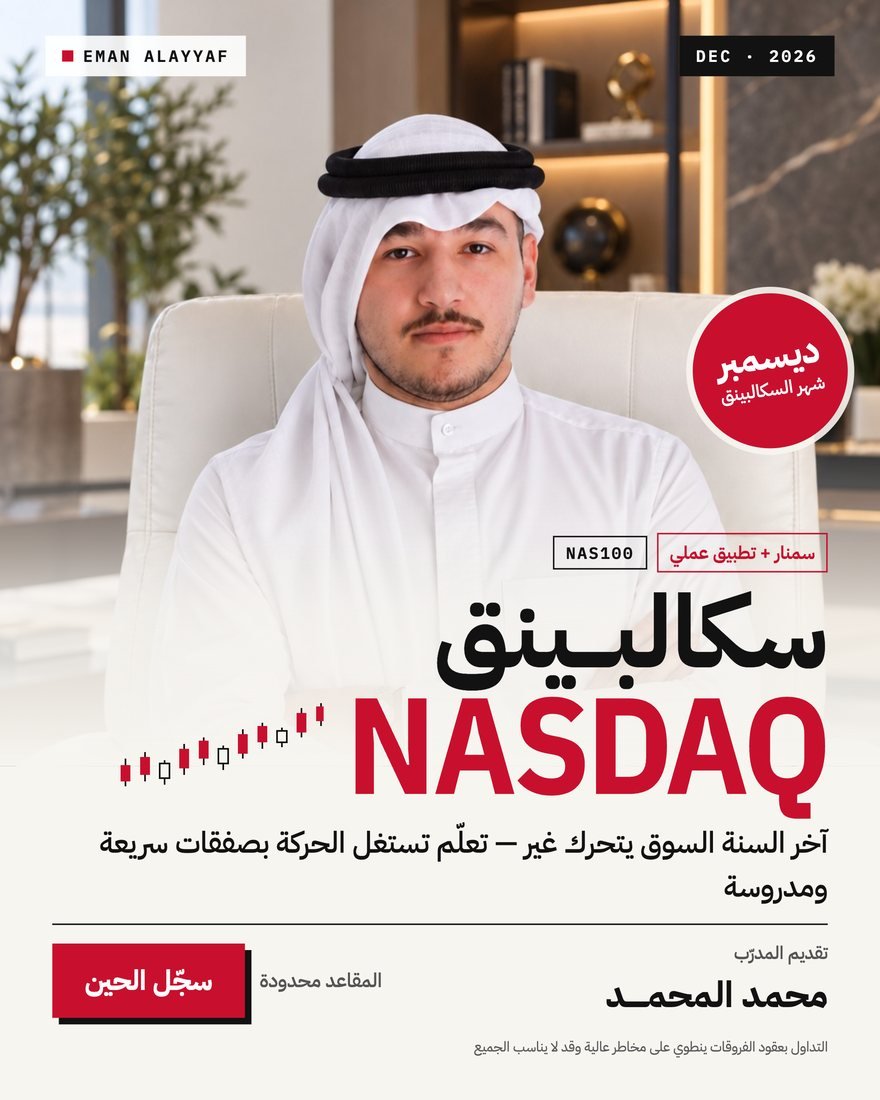
For traders who prefer quick trades within one session. Both include live practice, and both run in December 2026.
- Scalping Gold: short-term gold strategies built around the key sessions and news times.
- Scalping Nasdaq: fast setups on the Nasdaq 100 around the US open.
Four ready-made paths
| If you are… | Follow this path |
|---|---|
| Completely new to trading | Trading Principles → Support & Resistance → Fibonacci |
| Mainly interested in gold | Support & Resistance → Fibonacci → Scalping Gold |
| Curious how institutions move price | Supply & Demand → SMC → Wyckoff |
| Short on time, want quick trades after work | Trading Principles → Support & Resistance → Scalping Nasdaq |
Three tips that save beginners a lot of money
- Do not skip the basics. SMC and Wyckoff are powerful, but they are built on support, resistance and market structure.
- Practise between seminars on a demo account until each method feels natural.
- Learn risk before strategy. Know how to size every trade; our lot size calculator makes it simple.
Frequently asked questions
Which trading course should a beginner take first?
Start with Trading Principles, then Support & Resistance and Fibonacci. Together they give you the base that every other method builds on.
Are the seminars free?
Yes. All 13 seminars are free for Eman Alayyaf clients, in person in Kuwait, Bahrain and Oman or online from anywhere in the GCC.
Should I learn SMC as a beginner?
It is better to learn support and resistance and supply and demand first. SMC makes much more sense once you can read market structure.
Are the seminars in Arabic?
Yes. Our seminars are taught in Arabic and English.
Not sure which one is right for you?
Take the 30-second seminar quiz, browse all 13 seminars, or book a free consultation and our team will suggest the right path for you.
Risk warning: CFDs and forex are complex instruments and carry a high risk of losing money rapidly due to leverage. This article is educational and is not investment advice.
Want to learn this step by step?
Join our free seminars or talk to our team — we’ll help you choose the right starting point.
Risk warning: CFDs and forex carry a high risk of losing money due to leverage. This article is educational and is not investment advice.